
AI in Design: The New Creative World
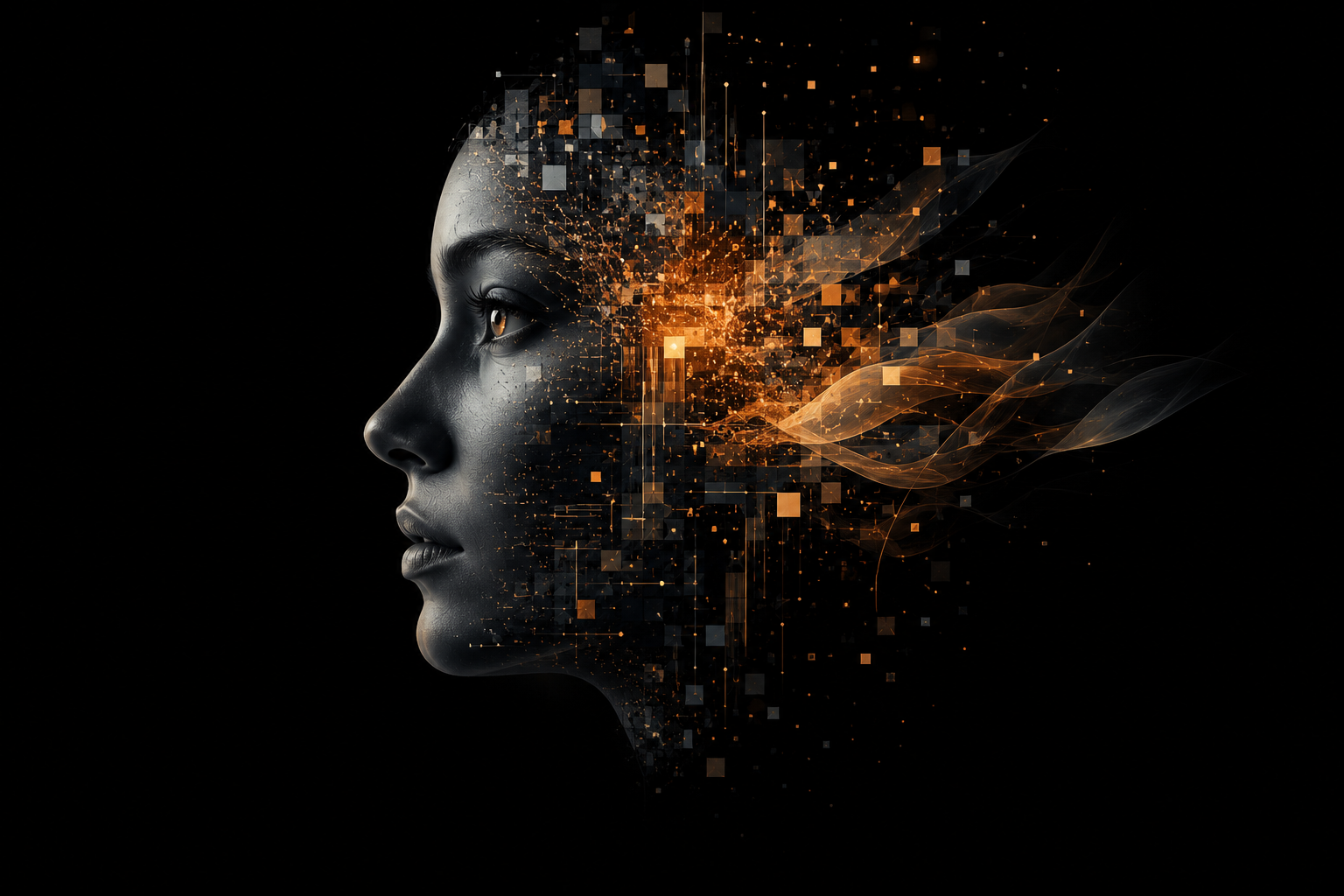
AI in Design: The New Creative World
How Artificial Intelligence is changing the way we imagine, design, and create
Design has always evolved alongside technology. From traditional print to digital design, from Photoshop to 3D, every new tool has reshaped the way creatives work and think.
Now, AI is driving the next major shift.
But AI isn’t replacing creativity. Instead, it is transforming how quickly an idea can become a visual reality.
From Idea to Visual, Faster Than Ever
In the traditional creative process, bringing an idea to life often involved multiple stages—research, moodboards, photography, 3D production, editing, retouching, and post-production.
AI is now compressing many of these steps into a much faster workflow.
A simple creative thought can quickly evolve into a visual concept, a product environment, a campaign direction, or even a cinematic sequence within minutes.
Because of this shift, the role of the designer is evolving—from simply creating visuals to directing ideas.
AI Is Becoming a Creative Partner
The most exciting part of AI is not automation—it’s exploration.
Designers can now experiment with ideas that were once too expensive, too time-consuming, or too technically complex to produce.
Think about possibilities like:
- A product campaign set in an impossible environment
- A complete visual world built around a brand identity
- Multiple advertising concepts explored in a single afternoon
- Cinematic product films without a traditional production setup
- Hundreds of visual directions tested before selecting the final one
AI makes experimentation faster—and experimentation is where the strongest creative ideas often emerge.
Design Still Needs Human Thinking
AI can generate an image.
It can generate a video.
It can create endless variations.
But it does not inherently understand why a visual should exist.
That is where designers and creative directors remain essential.
A strong creative outcome still depends on:
Strategy → Concept → Art Direction → Design → Execution
AI can accelerate execution, but the thinking behind the work remains human.
The best results happen when human creativity and AI capabilities work together.
From AI Images to AI Video
The evolution of AI is moving far beyond static visuals.
AI-powered video is opening an entirely new space for creative storytelling.
Brands can now explore cinematic product advertisements, conceptual brand films, social media content, motion graphics, visual effects, and experimental storytelling with entirely new production possibilities.
For creative studios, this means the boundaries between design, motion, photography, 3D, and filmmaking are becoming increasingly fluid.
A single idea can now move across multiple formats while maintaining a consistent visual identity.
What This Means for Brands
For brands, AI creates an opportunity to think bigger and more freely.
Instead of producing one visual direction, brands can explore many.
Instead of relying only on traditional product photography, they can build unique visual worlds.
Instead of waiting weeks to test a campaign concept, they can prototype ideas in a fraction of the time.
But speed alone is not the goal.
The real opportunity is to create work that is more relevant, more experimental, and more memorable.
The Future Belongs to Creative Direction
As AI tools become more accessible, the ability to simply generate visuals will become less valuable on its own.
What will matter more is understanding:
What should we create?
Why should we create it?
Who is it for?
How should it feel?
And how does it strengthen the brand?
This is where creative direction becomes more important than ever.
The future is not AI vs. Designers.
It is Designers with AI.
The Design Look Perspective
At The Design Look, we see AI as a new creative medium—one that expands what designers, brands, and creative teams can imagine.
We combine creative thinking, design expertise, AI-powered visuals, and video to transform ideas into experiences that capture attention.
Because technology can generate possibilities.
Creative thinking decides which possibilities are worth bringing to life.
The future of design isn’t about creating faster.
It’s about imagining bigger.
